2026-04-23 - Volatile and Restrictive
Dual blockade of the Strait of Hormuz by Iranian and US
One closed daily edition: image, reading, signals, sources, and provenance for this date.
AI-generated content. No prior human review.
Editorial Reading
Global tensions are heightening as a dual blockade in the Strait of Hormuz disrupts critical energy transit, while the United States shifts toward intensive resource extraction in protected public lands. Simultaneously, maritime incidents in the Pacific and the mainstreaming of insular digital subcultures indicate a tightening of both geopolitical and social boundaries.
Why this mattered
This state of the world reflects a move toward aggressive unilateralism and resource securitization. The closure of the Strait of Hormuz poses an immediate threat to global energy stability, compounded by US policy shifts that prioritize fossil fuel extraction over environmental conservation.
The presence of 'manosphere' aesthetics in political discourse suggests a hardening of social hierarchies that mirrors the current militaristic approach to foreign policy.
What moved the day
- Dual blockade of the Strait of Hormuz by Iranian and US forces
- Opening of US national parks to fossil fuel and timber extraction
- US maritime strike on Ecuadorian fishing vessel during anti-narcotic operations
- Influence of 'looksmaxxing' subculture on mainstream political language
World Signals
- conflict 82
- innovation 38
- resilience 31
- fragility economic 85
- pressure climate 88
- cultural pulse 72
Why the image looks like this
Visual frame
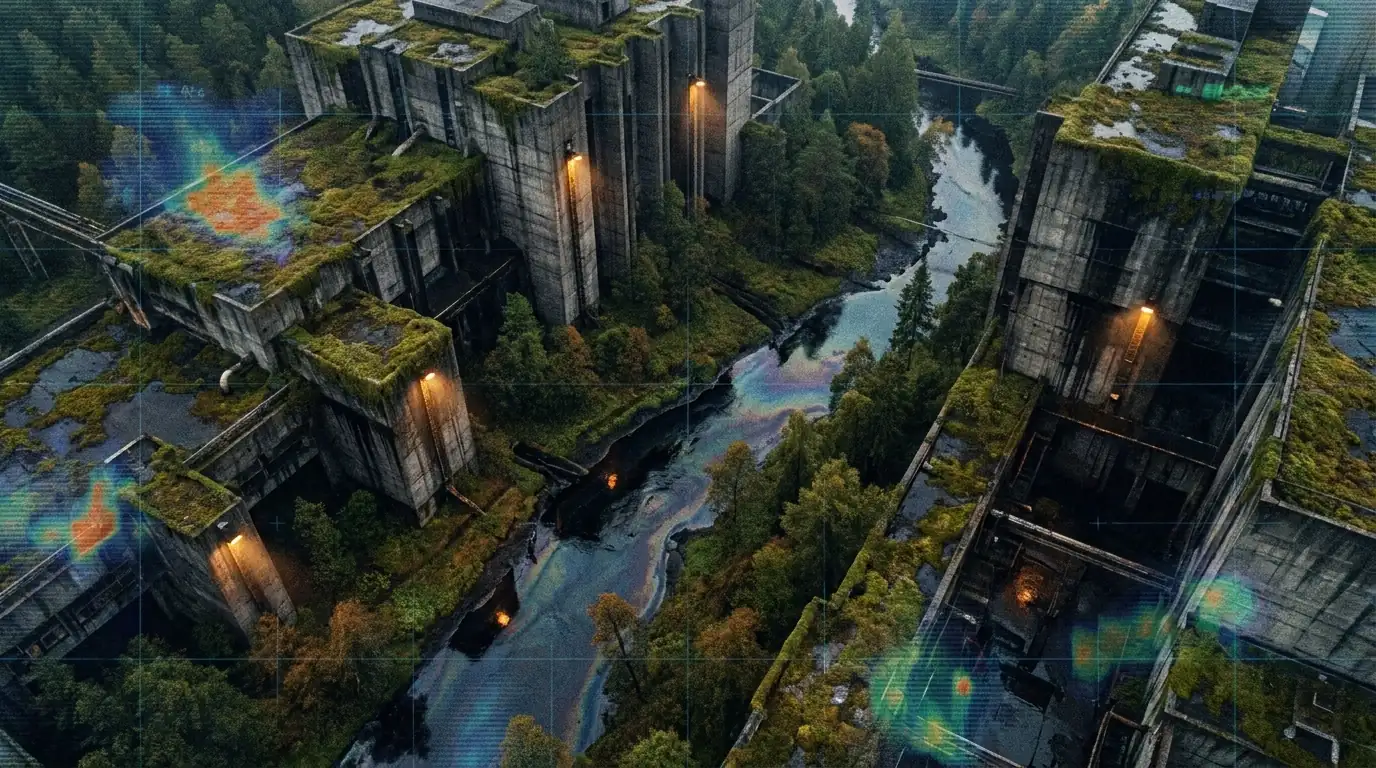
Volatile and Restrictive A wide-angle drone view depicts an industrial rig and timber facility embedded in a dark forest with thermal overlays and an oily river.
Concept
The Extraction of Order
How it was framed
Visual direction leans on High-contrast surveillance aesthetic, Grainy texture, and Thermal data overlays.
Color language is built around Petroleum Black, Crude Amber, Forest Moss, and Naval Gray.
Sources
BBC World News
Open source'Drill baby drill' ― Trump opens up nature to big energy
Open source‘Impossible’ to reopen strait of Hormuz amid ‘flagrant’ ceasefire breaches, Iran says
Open source'Looksmaxxing' — the manosphere beauty cult
Open source‘We were terrified they were going to kill us’: fishers who survived US boat strike speak out
Open source60 years after the Indonesian mass killings: Is the Cold War back?
Open sourceRelated editions
Method and provenance
Image prompt
Full-bleed drone perspective of a brutalist industrial extraction facility integrated into a dense, moss-covered ancient forest. A dark, iridescent oil-slicked river cuts through the landscape. Faint, translucent thermal data overlays and digital sensor noise across the frame. High-contrast lighting with crude amber glows against deep petroleum black and forest moss shadows. Edge-to-edge composition, grainy surveillance aesthetic.
Full Source Layer for This News Digest
BBC World News
Open source'Drill baby drill' ― Trump opens up nature to big energy
Open source‘Impossible’ to reopen strait of Hormuz amid ‘flagrant’ ceasefire breaches, Iran says
Open source'Looksmaxxing' — the manosphere beauty cult
Open source‘We were terrified they were going to kill us’: fishers who survived US boat strike speak out
Open source60 years after the Indonesian mass killings: Is the Cold War back?
Open source