2026-04-26 - Pragmatic Tension
The World Canvas for April 26, 2026
The global landscape on April 26, 2026, is defined by a dichotomy between technical ingenuity and systemic ecological pressure. Significant breakthroughs in medical microbiology and autonomous transportation offer a glimpse of future resilience, while urban centers like Athens struggle with the social costs of global tourism and U.S. environmental policies pivot toward resource extraction.
AI-generated content. No prior human review.
Editorial reading
The global landscape on April 26, 2026, is defined by a dichotomy between technical ingenuity and systemic ecological pressure. Significant breakthroughs in medical microbiology and autonomous transportation offer a glimpse of future resilience, while urban centers like Athens struggle with the social costs of global tourism and U.S. environmental policies pivot toward resource extraction.
Curatorial note
This state-of-the-world report highlights a period of intense transition. We are observing the emergence of specialized solutions for neglected challenges—such as the discovery of Noma-related bacteria and habitat bridges for endangered species—counterbalanced by macro-economic decisions that prioritize industrial expansion over traditional conservation. The tension between urban preservation and global mobility is reaching a critical inflection point.
What defined the day
- Identification of novel bacteria species providing pathways for Noma disease treatment
- Beijing International Automotive Exhibition shifts focus to full-scale AI autonomy
- Athens municipal leadership implements measures to combat urban over-saturation from tourism
- Sumatran conservationists document first successful primate use of artificial canopy bridges
- U.S. policy shift opens federal lands for expanded fossil fuel and timber harvesting
World index snapshot
conflict
38
innovation
84
resilience
72
fragility economic
52
pressure climate
75
cultural pulse
68
Why the image looks like this
Image rationale
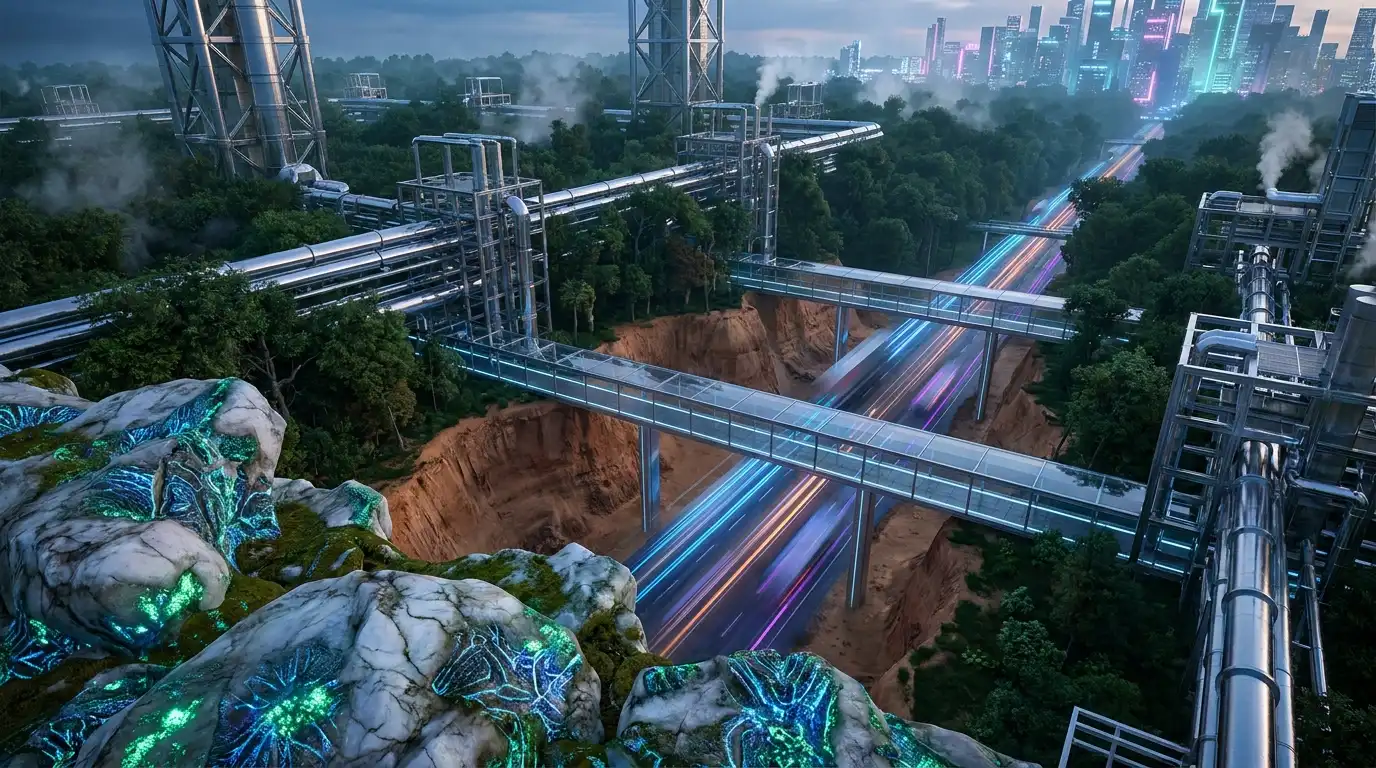
Pragmatic Tension - Cinematic long-exposure, Industrial-organic fusion, Hyper-realistic textures
Concept
The Synthetic Threshold
Sources behind the framing
‘Astonishing’ discovery could help save children from deadly disfiguring condition
‘Astonishing’ discovery could help save children from deadly disfiguring condition
‘Athens cannot operate as a giant hotel’: mayor vows to rescue capital from overtourism
‘Athens cannot operate as a giant hotel’: mayor vows to rescue capital from overtourism
‘Cries of delight’ as Sumatran orangutan filmed using canopy bridge to cross road for first time
‘Cries of delight’ as Sumatran orangutan filmed using canopy bridge to cross road for first time
Method and provenance
Image prompt
Cinematic high-angle aerial view of a synthetic landscape where industrial chrome structures intersect with a dense forest of chlorophyll green. In the foreground, intricate crystalline microbial patterns in Aegean cobalt glow with bioluminescent algae across weathered marble surfaces. The midground features raw sienna earth carved by industrial extraction, spanned by sleek artificial canopy bridges. Long-exposure light trails from autonomous transport vessels blur the transition between a neon-lit metropolis and rugged terrain. Full-bleed, edge-to-edge composition with hyper-realistic textures of polished steel and organic matter.
Full source layer
‘Astonishing’ discovery could help save children from deadly disfiguring condition
‘Astonishing’ discovery could help save children from deadly disfiguring condition
Open source‘Athens cannot operate as a giant hotel’: mayor vows to rescue capital from overtourism
‘Athens cannot operate as a giant hotel’: mayor vows to rescue capital from overtourism
Open source‘Cries of delight’ as Sumatran orangutan filmed using canopy bridge to cross road for first time
‘Cries of delight’ as Sumatran orangutan filmed using canopy bridge to cross road for first time
Open source'Drill baby drill' ― Trump opens up nature to big energy
'Drill baby drill' ― Trump opens up nature to big energy
Open source‘Look, no hands’: China chases the driverless dream at Beijing car show
‘Look, no hands’: China chases the driverless dream at Beijing car show
Open source